Paul Klee
5 - Pictorial Architecture Red, Yellow, Blue, 1923
Oil paint on primer on cardboard; original frame, 44,3 x 34 cm
Zentrum Paul Klee, Bern

Colour
There are relatively few purely abstract works in Paul Klee’s oeuvre. This painting belongs to his so-called square paintings and is one of Klee’s best-known abstract works. Here, he paints exclusively coloured squares and rectangles, although the forms are not rendered with perfectly right-angled corners. Unlike other artists, Klee employs a broad spectrum of mixed colours. While he refers to the primary colours red, yellow and blue in the title, he uses them in only a few areas. In this way, he achieves a great variety of colours, with marked differences in hue, tonal value and saturation. He paints the frame surrounding the picture in grey, which, in Klee’s theory of colour, is a neutral hue. In doing so, he draws on earlier theories of colour, such as those of Johann Wolfgang von Goethe and, in particular, Philipp Otto Runge with his colour sphere.
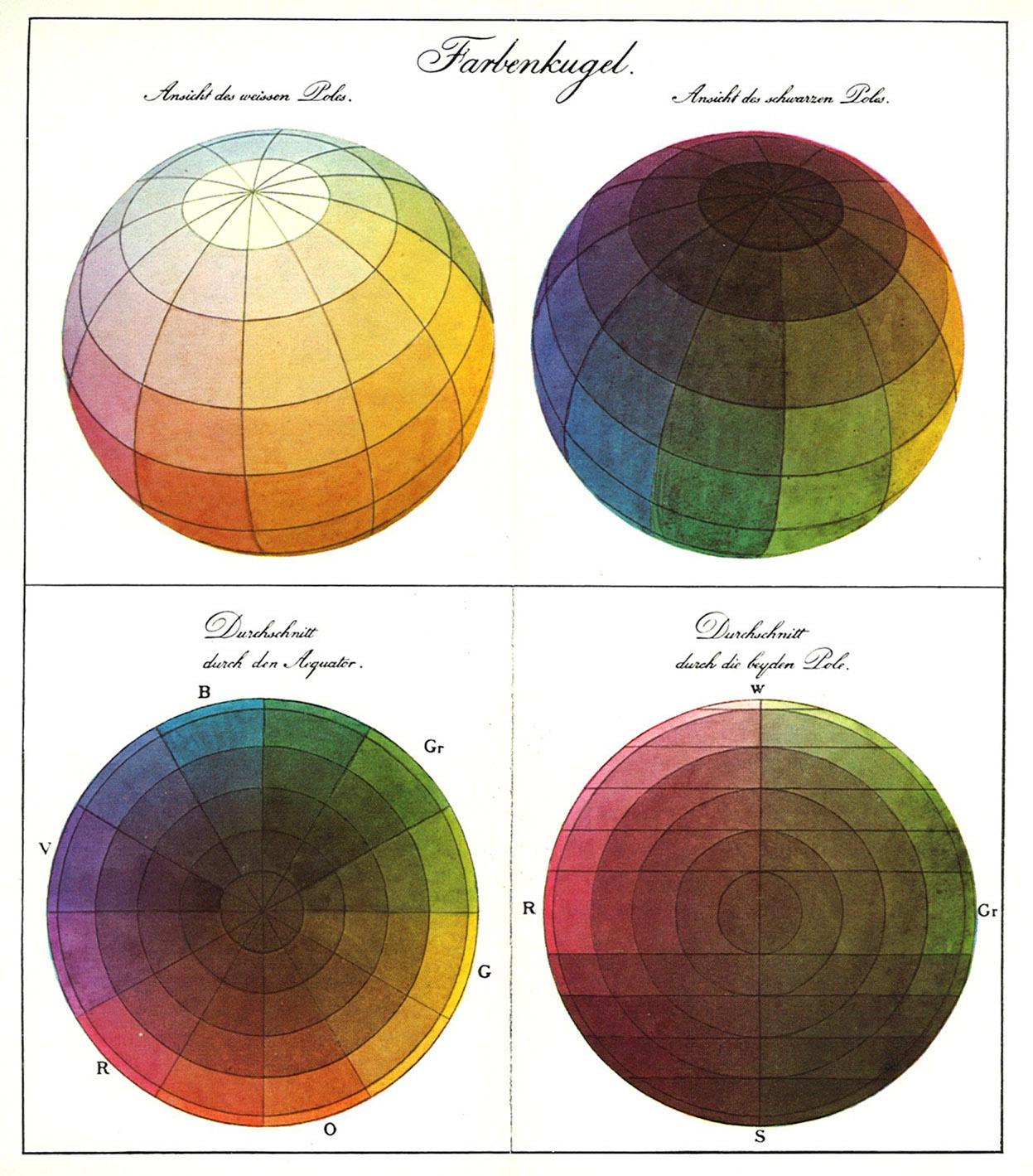
Philipp Otto Runge, Colour Sphere, 1810