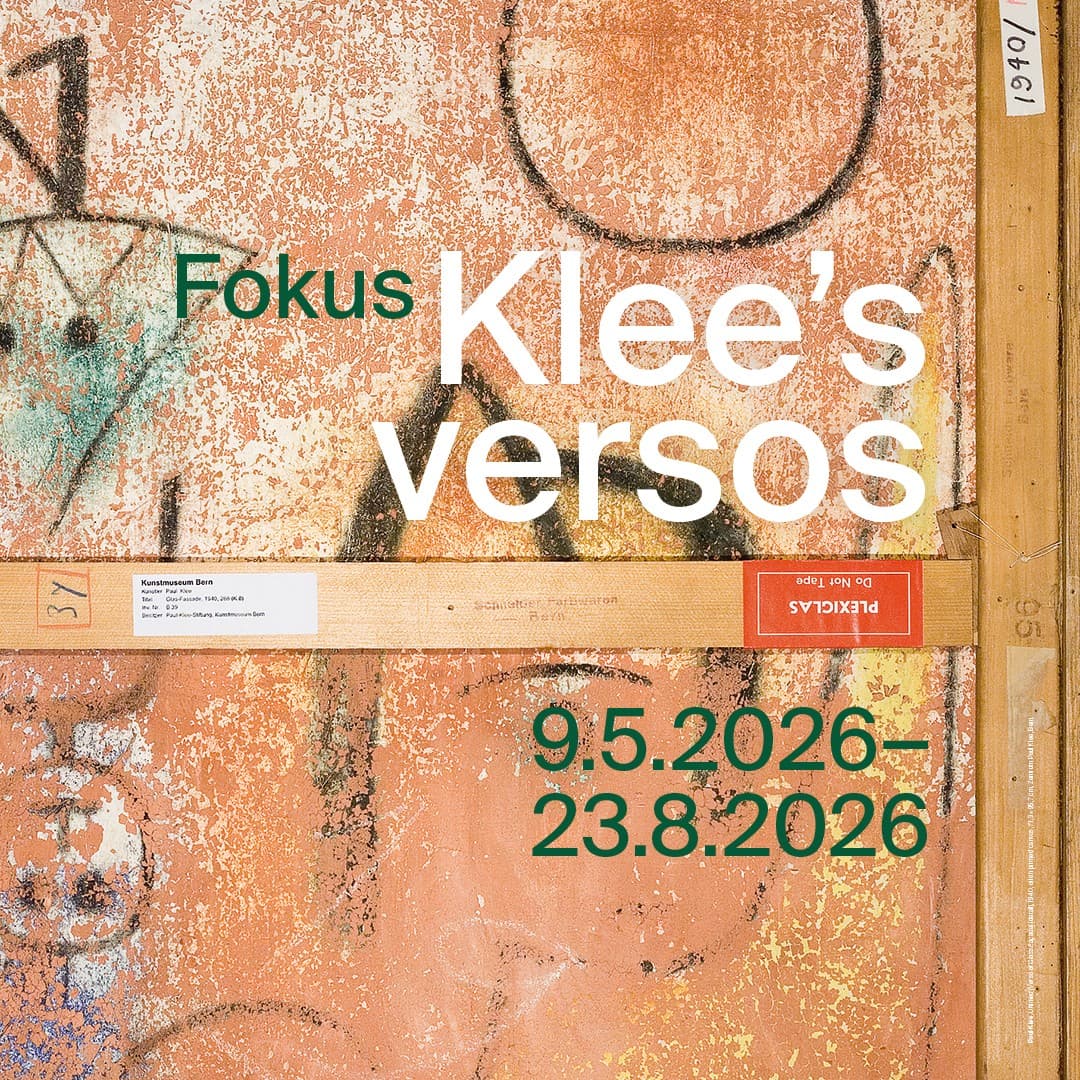
When painting and drawing, Paul Klee would often make use of not only the front but also the back of whatever surface he was using – be it paper, cardboard, or canvas. Drawings, watercolours, and paintings can be found on the back of some 600 of the 9,600 artworks he produced.
Making use of both sides of a work is by no means a modern innovation: artists were using the backs of artworks as early as the Middle Ages and the Renaissance, in religious art created for Gothic winged altarpieces, as well as in secular art, in particular for portraits on wooden panels. Even some modern artists such as Ernst Ludwig Kirchner, Erich Heckel, Wassily Kandinsky, and Alexej Jawlensky made use of both sides of the surface – in many cases due to a scarcity of materials or in order to make sketches and studies.
Yet for Klee, this approach sometimes took on a deeper meaning. He saw double-sided composition as part of an open, ongoing process. For him, art was always gradually revealing itself, like a mystery. Front and back frequently fused into one single entity on the levels of form, subject matter, and visual composition.
Klee’s double-sided artworks can be categorised according to whether the surface used is transparent or opaque. For example, Klee mounted monochrome and multicoloured sheets onto card, thereby concealing the other side. But in the case of transparent media such as very thin paper, anything on the other side remains partially visible, giving rise to ghostly impressions and a distinctive texture on the front. In the case of opaque media like canvas and cardboard, the back can often only be revealed through restoration, scientific analysis, or precise manipulation.
This exhibition showcases the breadth of Klee’s double-sided designs by means of 19 exemplary artworks: from reworked children’s drawings to protracted creative processes, discarded works that the artist classified as “invalid”, thematic and formal links, reused materials, and artworks that were previously obscured and have only come to light as a result of decay and deterioration.


![Paul Klee, Ohne Titel [Rückseite von Litho nach 15/125]](/_next/image?url=https%3A%2F%2Fkmbzpk.nodehive.app%2Fsites%2Fdefault%2Ffiles%2Fstyles%2Fartwork%2Fpublic%2F2026-04%2F83620%2520%25281%2529.jpg%3Fitok%3D3MpV3OiD&w=1920&q=75)


