Introduction
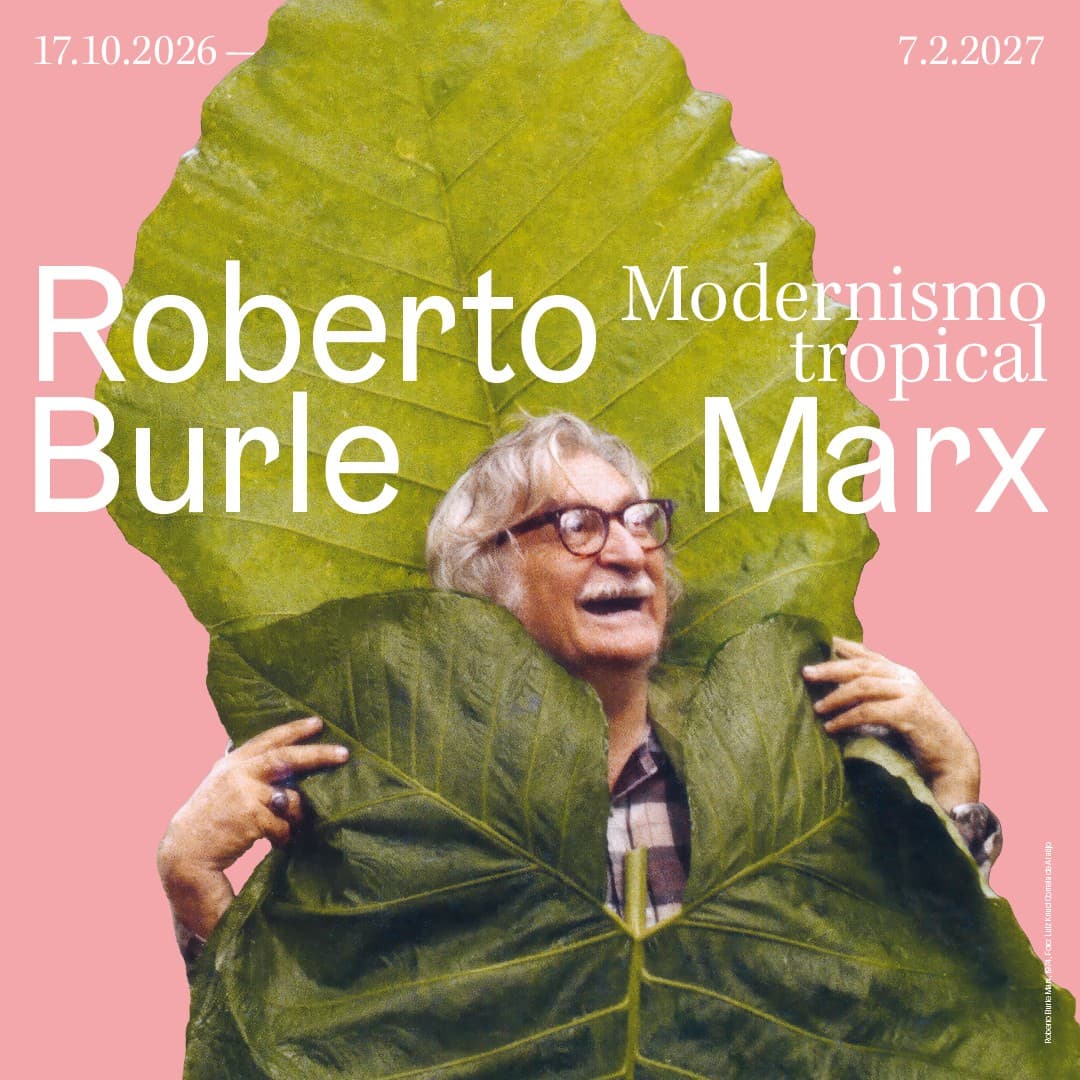
Roberto Burle Marx (1909–1994) is one of the leading figures of Brazilian Modernism. A versatile artist and designer, he turned toward abstraction across a wide range of media such as painting, drawing, tapestry, murals and jewellery. Today, he is primarily known for his work as a landscape architect. From the 1930s on, he revolutionised garden design in Brazil by making use of native plants. Until his intervention, these had been considered inferior to European flora by the Brazilian elite. Burle Marx broke with this hierarchical view of plant life and made native plants socially respectable. In this, he followed a similar path to the Brazilian avant-garde, who were reimagining their own culture in the visual arts, literature and music. In his landscape architecture projects, Burle Marx often worked with mass planting schemes, where clearly defined, organically contoured or orthogonal areas would be densely planted with one specific kind of plant. As in painting, this creates juxtaposed surfaces, contrasting in their form, colour, or texture.
Burle Marx is a decidedly interdisciplinary artist, also designing jewellery, theatre costumes and stage sets. For interiors, he created large format tapestries, and tile or mosaic murals and concrete reliefs for his park projects. For the beach promenade at Copacabana in Rio de Janeiro, he designed a pattern of red, white and black paving stones running the length of the beach in abstract shapes. With his public park projects, Burle Marx established recreational spaces that provided a rapidly growing urban population with opportunities to connect with nature.
Many of the plants Burle Marx used in his designs were gathered during excursions to remote locations. The Sítio Roberto Burle Marx holds an extensive collection of plants that includes rare species that have now disappeared in the wild. Already in the 1960s, Burle Marx was speaking out against deforestation and the destruction of biodiversity. He was one of the first environmentalists to campaign for the protection of biodiversity in Brazil. Burle Marx combined ecology, urbanism and art in a unique way – an aspect that continues to make his work particularly relevant and fascinating today.
Exhibition organised and curated by the Zentrum Paul Klee and Fundación Juan March in partnership with the Burle Marx Institute and the support from Sítio Roberto Burle Marx.
Chronology
1909
Roberto Burle Marx was born in São Paulo on 4 August as the fourth of six children of Cecília Burle, a Brazilian pianist, and Wilhelm Marx, a German-Jewish leather merchant. Classical music and literary salons formed part of everyday life. European culture was as present as Brazilian culture.
1916
Roberto’s aunt Evangelina Burle makes him a gift of an Alocasia cuprea, which is the beginning of Burle Marx’s first plant collection.
1928
The family moves to Berlin for a year and a half. Burle Marx visits museums and attends concerts, the ballet, the opera. He is especially impressed by the works of the European avantgarde and decides to devote himself to painting. At the same time, he contemplates a career as a baritone. In the greenhouses of the Botanical Gardens in the Berlin suburb of Dahlem, he becomes aware of the extraordinary aesthetic diversity of Brazilian tropical flora. He sketches his first landscapes, gardens, flowers and urban scenes.
1932
At the invitation of architects Lucio Costa and Gregori Warchavchik, Burle Marx designs his first gardens, integrating tropical flora into modern architecture.
1934
Burle Marx takes over as director of the office for public parks and gardens in Recife, the capital of the north-eastern state of Pernambuco.
1937
Getúlio Vargas declares the establishment of the Estado Novo. The republic becomes a repressive dictatorship. Burle Marx’s position in Recife comes to an end following a series of political and aesthetic controversies. He returns to Rio de Janeiro, where he works as an assistant to Candido Portinari.
1940
The number of his commissions increases significantly, and Burle Marx takes on his first megaproject — working with architect Oscar Niemeyer on designs for the new suburb of Pampulha, in Belo Horizonte.
1941
His first solo exhibition takes place in the Salão de Exposições of the Associação de Artistas Brasileiros, at Rio de Janeiro’s Palace Hotel.
1943
The exhibition Brazil Builds: Architecture New and Old, 1652–1942 at the Museum of Modern Art in New York shows works by Burle Marx, garnering him international recognition.
1946
A solo exhibition devoted to Burle Marx’s paintings is held at the Galeria Itapetininga in São Paulo. His visual language grows increasingly abstract.
1949
With his brother Guilherme Siegfried, Burle Marx acquires the Sítio Santo Antônio da Bica in Barra de Guaratiba, Rio de Janeiro. Burle Marx transforms the former sugar plantation into a botanical laboratory with greenhouses and plant gardens for his plant collection, which will become crucial for his landscape architecture projects.
1950
He undertakes his first collecting expedition in the Amazonas region. Together with artists like Candido Portinari, Di Cavalcanti, Flávio de Carvalho, Alfredo Volpi, and Victor Brecheret, Burle Marx exhibits in the Brazilian pavilion at the 25th Venice Biennale. He makes his first stage designs and the costumes for the play As águas, performed at the Teatro Fênix in Rio de Janeiro.
1952
The Museu de Arte de São Paulo dedicates a retrospective to Burle Marx, emphasising the interdisciplinary dimension of his oeuvre. The exhibition goes on to be shown in various cities in the United States and Europe.
1953
At the first international architecture exhibition, part of the II Bienal de São Paulo, Burle Marx is given the prize for landscape architecture, for his design of the Odette Monteiro Residence. He proposes an ambitious landscape design project for the Parque do Ibirapuera, but it is never realised. 1954 Burle Marx is appointed professor of landscape architecture at the architecture faculty of the Universidade do Brasil (now the Universidade Federal do Rio de Janeiro).
1955
Together with his brother Siegfried, he founds the landscape architecture office of Burle Marx & Cia. Ltda. in Rio de Janeiro.
1956
Burle Marx works on multiple projects in Venezuela, including the extensive Parque del Este in Caracas. His work receives recognition in Europe through the exhibition Roberto Burle Marx: Brazilian Landscape and Garden Design at the Institute of Contemporary Arts in London. The exhibition travels to the Kunstgewerbemuseum in Zurich, the Stedelijk Museum in Amsterdam, the Palais des Beaux-Arts in Brussels, as well as Rome and Naples. Juscelino Kubitschek is elected president.
1961
Burle Marx designs the large Parque do Flamengo park, a recreation area in Rio de Janeiro that is one of the most significant urban development projects. For Juscelino Kubitschek’s newly founded capital Brasília, Burle Marx develops large-scale landscape architecture projects that are never realised.
1963
Burle Marx receives the Grand Prize for Jewellery Design at the I Bienal de Joias, which takes place concurrently with the VII Bienal de São Paulo. Since the 1950s, he has been designing jewellery, which his brother Haroldo produces and sells. He designs six gardens for the inner courtyards of UNESCO headquarters in Paris.
1964
President João Goulart is deposed in a coup. A military dictatorship, which will last for more than two decades, seizes power, setting in motion drastic political and cultural changes.
1965
Burle Marx becomes a member of the Federal Council of Culture. He uses his influence within the military dictatorship government to advocate for the protection of native species and landscapes. He draws attention to the consequences of slash-and-burn agriculture, climate change and declining biodiversity, and in the years that follow gives lectures on nature conservation, species extinction and erosion. In Brasília, he designs the gardens of the Ministry of Foreign Affairs. For the banquet hall, he creates a large, abstract tapestry, 26 metres in length.
1968
Architects Haruyoshi Ono and José Tabacow become partners at Burle Marx & Cia. Ltda. and expand the firm’s capacities. Ono will go on to head the firm after Burle Marx’s death.
1970
The 35th Venice Biennale includes a special section dedicated to Burle Marx, featuring paintings and landscape projects. He designs the Copacabana beach promenade in Rio de Janeiro, paved with different-coloured cobblestones, as well as in Brasília the Praça dos Cristais for the Ministry of the Army and the gardens of the Ministry of Justice.
1973
Burle Marx takes up residence at Sítio Santo Antônio da Bica and continues to expand the premises. He publicly condemns the use of highly toxic chemical herbicides for deforestation in the Amazonas region and warns of the environmental and social consequences. This sparks widespread coverage in the national media. He thus becomes one of Brazil’s first environmentalist.
1974
Burle Marx resigns from his position on the Federal Council of Culture in protest against its institutionalisation under the dictatorship and against the systematic indifference toward environmental crimes. In the ensuing years, he voices his criticism in lectures and during an appearance before the Brazilian Senate.
1983
He embarks on an 11,000-kilometre plant-collecting expedition across the Amazonas region, accompanied by a team of gardeners, botanists, agronomists and friends. 1985 To ensure the preservation of his work, Burle Marx donates the Sítio Santo Antônio da Bica, with its botanical and artistic collections, to the Brazilian federal government. The Sítio is officially renamed Sítio Roberto Burle Marx and is added to the UNESCO World Heritage List in 2021. The military dictatorship comes to an end, and a slow process of re-democratisation begins.
1991
The Museum of Modern Art in New York holds a major retrospective, Roberto Burle Marx:The Unnatural Art of the Garden, significantly contributing to his recognition as one of the most influential landscape architects of the 20th century.
1993
Together with Haruyoshi Ono, Burle Marx plans further major international projects such as the Kuala Lumpur City Centre Park in Malaysia and an unrealised project for the Rosa-Luxemburg-Platz in Berlin.
1994
Roberto Burle Marx dies on the 4 June.
Supporting programme
Roberto Burle Marx – Denken im Systema naturae
Sonntag, 8. November 2026, 15:00
Vortrag mit anschliessendem Gespräch in der Ausstellung
Der international tätige Landschaftsarchitekt Maurus Schifferli erklärt, wie Burle Marx Prinzipien der Pflanzenverwendung zwischen Botanik, Städtebau und Landschaftsarchitektur entwickelte.
Welche Bedeutung hat Burle Marx’ Landschaftsarchitektur heute?
Sonntag, 29. November 2026, 15:00
Podiumsdiskussion im Forum mit:
Robin Winogrond (Landschaftsarchitektin / Urban Designerin, Zürich), Glenn Fischer (Landschaftsarchitekt / Brasilien-Experte, Bern), Martina Voser
(Professorin für Landschaftsarchitektur ETH Zürich / Partnerin bei mavo Landschaften). Moderation: Daniel Baur (Professor für Landschaftsarchitektur FH Bern / Mitgründer Büro Bryum, Basel)
Erkunden Sie die Pflanzenwelt von Roberto Burle Marx
Führungen im Botanischen Garten der Universität Bern mit Katja Rembold
Donnerstag, 3. Dezember 2026
Dienstag, 12. Januar 2027
Dienstag, 2. Februar 2027
jeweils 18:00, Treffpunkt: Palmenhaus
Eine Zusammenarbeit mit dem BOGA Bern
Führungen
Kunst über Mittag
Dienstags, 12:30 (Jede 2. Woche, siehe Website)
Öffentliche Führung
Samstags, 15:00 / Sonntags, 13:30
Visites guidées / Guided tours / Visite guidate
Français : 15.11.2026 / 6.12.2026, 15:00
English: 22.11.2026 / 13.12.2026, 15:00
Italiano: 1.11.2026 / 17.1.2027, 15:00
Einführung für Lehrpersonen
Mittwoch, 21. Oktober 2026, 14:00
Eine Einführung für Lehrpersonen zur Ausstellung
mit Tipps für den Besuch mit der Schulklasse
Bilderclub
Samstag, 31. Oktober 2026, 11:00 – 12:30
Donnerstag, 10. Dezember 2026, 15:00 – 16:30
Sinn-Reich
Samstag, 12. Dezember 2026, 13:00
Eine alle Sinne ansprechende Führung für Menschen mit und ohne Behinderung. Mit Gebärdensprachdolmetscher:in und induktiver Höranlage
Creaviva
Interaktive Ausstellung Jardim Vivo
Di – So, 10:00 – 17:00
Interaktive Antwort auf die Ausstellung Roberto Burle Marx. Modernismo tropical
Für Familien mit Kindern ab 4 Jahren, Eintritt frei
Offenes Atelier
Di – Fr 14:00 / 16:00
Sa – So 12:00 / 14:00 / 16:00
Einstündige Gestaltungsworkshops mit monatlich wechselnden Themen und Techniken in Anlehnung an die Ausstellung.
Für Kinder ab 4 Jahren, Erwachsene und die ganze Familie
Familienmorgen
Sonntags, 25.10.2026 – 7.2.2027, 10:15 – 11:30
Workshop im Atelier mit interaktiver Führung durch die Ausstellung: Mit Roberto Burle Marx den eigenen künstlerischen Ausdruck entdecken.
Für Familien mit Kindern ab 4 Jahren
Blaue Stunde
Dienstag, 27. Oktober 2026, 17:30 – 19:00
Begegnung mit Roberto Burle Marx: Inspiriert von seinem eindrücklichen Schaffen entstehen eigene, unverwechselbare Werke im Atelier.
Kunstkurs für Erwachsene (ab 16 Jahren) mit einfachem Werkstattapéro
Goldener Morgen
Samstag, 5. Dezember 2026, 9:30 – 11:30
Der Samstagvormittag steht im Zeichen der Kunst von Roberto Burle Marx. Im Atelier werden Eindrücke der Ausstellung in gestalterische Prozesse überführt.
Kunstkurs für Erwachsene (ab 16 Jahren) mit Kaffee und Zopf
Imprint
Digital Guide
Implementation: Netnode AG
Project management: Dominik Imhof
Translations: Gegensatz Translation Collective
The Zentrum Paul Klee is accessible and offers inclusive events.
Publication
The exhibition catalogue invites you to delve into Burle Marx’s diverse body of work. It is published in German and English by Snoeck Verlag. Available from the museum shop.
In collaboration with


With the support of


Media Partner